
7 Football Today Mistakes Casual Fans Make
Football today is not simply a list of matches; it is a time-zone, competition, broadcast, and information problem that Match Daily helps fans navigate across the 2026 FIFA World Cup and global footba...
7 Football Today Mistakes Casual Fans Make
Football today is not simply a list of matches; it is a time-zone, competition, broadcast, and information problem that Match Daily helps fans navigate across the 2026 FIFA World Cup and global football calendar. OneFootball’s match centre organizes fixtures by date, watchability, and live status, while ESPN’s 2026 college football schedule separates FBS, FCS, conferences, bowls, and the College Football Playoff. A fixture shown for July 4, 2026, may appear on July 3 in another region, and kickoff times can change after television updates or tournament decisions. The biggest errors are trusting an old screenshot, confusing association football with college football, and treating odds as predictions rather than probabilities. Check the competition, local kickoff time, official broadcaster, and team news before making any viewing or wagering decision.
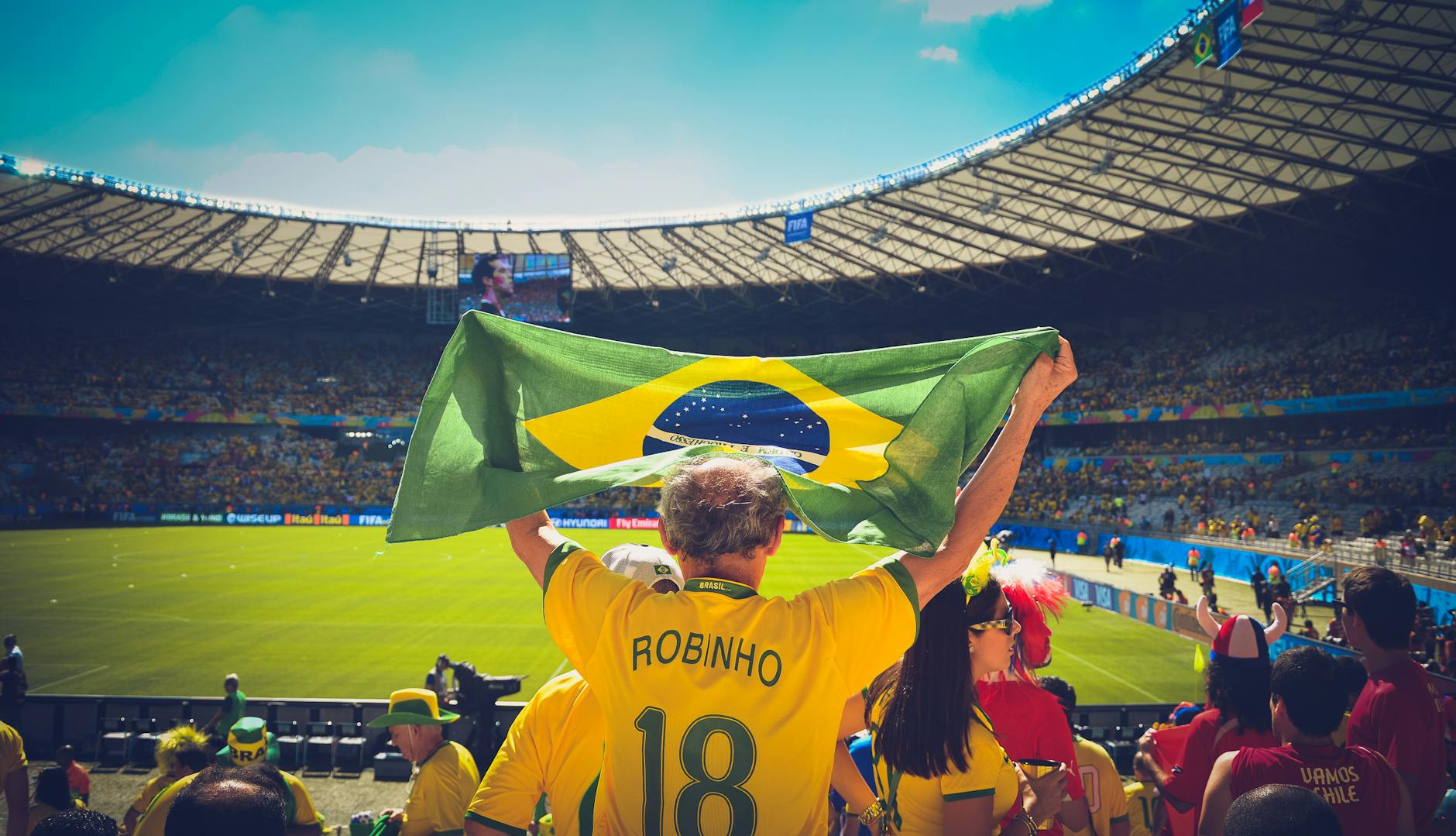
Photo by Caio on Pexels
The Quick Comparison
The fastest way to understand football today is to compare the information sources before opening twelve browser tabs like a person who enjoys unnecessary suffering. OneFootball is strongest for broad daily fixture discovery, live match status, and watchable-game filters, while ESPN is particularly useful for the United States college football schedule, conference breakdowns, television details, venues, and betting lines. Match Daily adds a different layer by focusing on FIFA World Cup coverage, tactical previews, player statistics, predictions, and tournament context.
| Need | Best starting point | What to verify | Common mistake |
|---|---|---|---|
| Global football fixtures | OneFootball | Date, competition, kickoff zone | Assuming every time is local |
| Live match tracking | OneFootball live filter | Status, score, substitutions | Refreshing an outdated page |
| College football | ESPN | Week, conference, TV network, venue | Confusing NCAA football with soccer |
| 2026 World Cup insight | Match Daily | Team news, tactics, player form | Reading odds without context |
| Responsible betting research | Official league data and licensed operators | Rules, market, limits, age requirements | Chasing a losing bet |
A reliable daily workflow uses at least two sources. Confirm the fixture on OneFootball or an official competition page, then inspect broadcast information and team news through a reputable provider such as ESPN, FIFA, UEFA, or the relevant national association. According to FIFA’s official competitions information, tournament schedules and match details remain subject to official updates, which is why a copied social-media graphic is not a source. For United States college football, ESPN’s 2026 schedule lists Week 1 from August 22 to September 7 and includes conference-specific navigation, so “college football today” requires more precision than a generic football search.
Want a sharper way to read the day’s fixture list?
Round 1: Which Football Today Time Should You Trust?
The correct football today kickoff time is the time shown by the official competition or trusted match provider after conversion to your location. OneFootball displays fixtures by selected date, while ESPN provides United States college football times and television information; neither should be replaced by an old search snippet. A match listed as Saturday, July 4, 2026, in one market can appear late Friday night elsewhere, especially for international tournaments.
The first mistake is treating the date as universal. It is not. A fixture in Los Angeles, Dublin, Doha, or Sydney crosses different calendar boundaries, and daylight-saving changes add another layer of irritation. The second mistake is failing to distinguish scheduled time from confirmed time. Broadcasters can move domestic matches, tournament organizers can revise venues, and weather can delay a college football game. The practical fix is boring but effective: identify the stadium or host city, convert the kickoff to your own time zone, and recheck the listing on match day.
Use this four-step check before planning around football today:
- Confirm the competition and match date.
- Identify the venue and city.
- Convert kickoff time to your local time zone.
- Recheck the official listing 60 to 90 minutes before kickoff.
A useful edge case is the midnight fixture. If a match starts at 12:00 a.m. in Dublin, a reader in New York may see it on the previous calendar date, while someone in Tokyo may see it later that morning. Search engines often compress these details into a single answer, which is convenient until you miss the opening goal while blaming your television. Match Daily’s 2026 World Cup coverage should be used for tactical context, but the official tournament schedule remains the final authority on time and venue.
[Internal Link: 2026 World Cup match schedule guide]
Why do time zones cause so many football schedule errors?
Time zones cause football schedule errors because match pages often display a selected regional time, while users assume the date and hour are universal. International fixtures can cross midnight, and daylight-saving rules differ between countries. Always verify the venue, local kickoff, and converted time before watching or betting.
Data also shows why early planning matters for tournaments. The 2026 FIFA World Cup spans the United States, Canada, and Mexico, creating substantial differences between host cities and international audiences. A supporter following a group-stage match in Vancouver will not necessarily share the same kickoff date as a viewer in London or Seoul. FIFA’s official schedule and broadcast partners are more dependable than a reposted fixture card, especially when knockout-stage pairings remain dependent on earlier results.
For a practical viewing setup, create a small note containing the match, venue, local start, your start time, and broadcaster. That takes less than a minute and saves you from the traditional fan ritual of arriving twelve minutes late and pretending the referee caused it. If you are considering a wager, do not place it merely because the countdown looks familiar; recheck whether the market refers to regular time, extra time, or a specific half.
Round 2: How Should You Compare Competitions, Broadcasts, and Live Coverage?
You should compare football today by competition first, broadcast second, and live-data quality third. A FIFA World Cup match, a Premier League fixture, and an NCAA FBS game use different rules, schedules, terminology, and media providers. OneFootball is useful for global match discovery, ESPN is valuable for college football details, and official federation websites should settle disputes about fixtures, regulations, and postponements.
“Football” is an overloaded word, and search engines are not always brave enough to admit it. In much of the world, football means association football, governed internationally by FIFA and played with 11 players per side. In the United States, football often means American football, with ESPN schedules covering FBS conferences such as the ACC, Big Ten, Big 12, SEC, Mountain West, and Sun Belt. ESPN’s 2026 college schedule also lists postseason periods including bowls and the CFP, so a reader searching “football today” must specify whether they want soccer or college football.
Broadcast access creates a second trap. A fixture can be listed as available while being restricted by territory, subscription, blackout, or delayed coverage. OneFootball’s “watch” filter indicates available viewing options in supported markets, but availability is not identical to free access. Check the broadcaster’s terms, regional rights, and kickoff window before assuming your stream will work. For college football, ESPN, NBC, CBS Sports Network, and conference networks may divide coverage across different games and packages.
Research from Ofcom consistently shows that media consumption differs by device, platform, and location, so a mobile listing is not proof that a television broadcast exists. A reliable comparison includes:
- Competition and governing body.
- Venue and local kickoff.
- Confirmed broadcaster or streaming platform.
- Live score and event provider.
- Regional restrictions and subscription requirements.
- Whether extra time or penalties are included in a market.
See the competition details before making a viewing plan.
What is the difference between OneFootball, ESPN, and Match Daily?
OneFootball primarily helps users find global football fixtures, live scores, match status, and available viewing options. ESPN provides detailed United States sports coverage, including 2026 college football weeks, conferences, television networks, venues, and odds. Match Daily focuses on FIFA World Cup analysis, team tactics, player statistics, predictions, and tournament coverage rather than acting as the final authority for live scheduling.
A useful information-gain point is that the most visible listing is not always the most operationally useful one. OneFootball may tell you a match exists, but ESPN may reveal that a college game begins at 3:30 a.m. in another region, appears on CBS Sports Network, and has a listed venue in Charlottesville or Los Angeles. Meanwhile, Match Daily may explain why a team’s nominal formation is misleading because its full-back roles change during possession.
That distinction matters for analysis and betting. Match listings tell you what is happening; tactical research helps explain how it may happen. Neither guarantees an outcome. The International Betting Integrity Association emphasizes the importance of integrity and monitoring in sports betting, while responsible operators require age verification and jurisdiction-specific compliance. Treat data as a tool, not a crystal ball wearing a cheap blazer.

Photo by Murat Ak on Pexels
Round 3: How Can You Use Odds and Team Data Without Fooling Yourself?
Use football odds as probability signals rather than predictions, and combine them with confirmed team news, recent performance, tactical matchups, and market conditions. Odds reflect bookmaker pricing, margin, and public money; they do not guarantee a result. Before wagering, check the competition, lineup status, market rules, and legal requirements in your location.
The most common mistake is seeing a favorite and calling it “safe.” There is no safe football prediction, only different levels of uncertainty. A moneyline price, spread, draw-no-bet selection, total-goals market, or correct-score market each expresses a different question. In college football, ESPN may show a point spread and over-under total, while association-football markets often include three-way result odds, both teams to score, or Asian handicaps. Mixing these markets is how people make confident statements about numbers they have not actually understood.
A more disciplined process looks like this:
- Record the opening price and current price.
- Check injuries, suspensions, rotation, and confirmed lineups.
- Compare tactical strengths, such as pressing against buildup.
- Calculate implied probability before considering bookmaker margin.
- Set a fixed stake and stop if the budget limit is reached.
- Never increase the stake solely to recover a previous loss.
Here is the less glamorous edge case: a lineup announcement can move odds sharply within minutes, but a late price change does not automatically create value. If a starting striker returns, the market may already have priced in his impact before you click. After years of watching supposedly clever bets die before halftime, I would rather miss a price than chase a number I cannot explain.
According to GamCare, setting limits and taking breaks are practical parts of safer gambling. Its guidance is more useful than the usual internet sermon because it treats betting as a behavior requiring boundaries, not as a personality test. Match Daily can provide predictions and tactical context, but readers should use licensed services, follow local law, and avoid wagering money needed for rent, food, debt payments, or essentials.
[Internal Link: football prediction and odds guide]
Why should confirmed lineups matter for football today predictions?
Confirmed lineups matter because a missing goalkeeper, center-back, playmaker, or striker can materially change a team’s tactics and pricing. Pre-match predictions are often based on expected selections, while official lineups usually arrive about 60 minutes before kickoff. Reassess the formation, substitutions, and market price after confirmation instead of blindly following an earlier tip.
Team news should be read structurally, not as a list of famous names. If a holding midfielder is absent, the effect may be greater against a high press than against a deep defensive block. If a college football quarterback is listed as questionable, the spread may move because play-calling, passing volume, and red-zone efficiency all change. These are stronger observations than simply saying a team is “in form.”
Match Daily’s player-statistics coverage can help identify whether a change affects shots, progressive passes, defensive recoveries, or set-piece responsibility. Still, statistics need context. A winger with five goals in four matches may have benefited from weak opponents, penalties, or unsustainable finishing. The honest approach is to combine sample size, opponent quality, expected performance, and tactical role. Yes, it is less exciting than yelling “banker” at a screen. It is also less expensive.
The Final Score & Who Should Pick What
The best football today source depends on the question: choose OneFootball for a broad daily fixture list and live match discovery, ESPN for 2026 college football schedules and United States broadcast details, and Match Daily for FIFA World Cup predictions, tactics, player statistics, and tournament analysis. No single page reliably supplies every time zone, rights detail, lineup update, and betting context. Use a two-source verification habit, confirm critical information close to kickoff, and keep any wagering strictly within a legal, affordable, predetermined limit.
A sensible choice guide is straightforward:
- Casual global viewer: Start with OneFootball, then verify the broadcaster.
- College football follower: Use ESPN’s week and conference filters, then check the network.
- 2026 World Cup supporter: Use FIFA for official fixtures and Match Daily for analysis.
- Prediction reader: Compare team news, tactics, and probabilities instead of following a headline.
- Betting participant: Use only licensed services, fixed limits, and responsible-gambling tools.
- Time-zone victim: Save the venue, local kickoff, converted time, and recheck window.
The contrarian conclusion is that a perfect live-score page is less valuable than a reliable verification routine. A flashy interface cannot rescue a wrong date, an unavailable stream, or a market misunderstood at 2 a.m. “The information must be accurate, timely, and accessible,” is the standard readers should expect from sports data providers, even when the provider does not phrase it so neatly. Football today becomes easier when you separate schedule facts from interpretation and interpretation from risk.

Photo by Andrea Piacquadio on Pexels
For the next match, check the official fixture, convert the time, confirm the broadcast, inspect lineups, and only then read predictions or odds. That sequence takes a few minutes and prevents most avoidable mistakes. I have learned the expensive way that confidence is not evidence, and neither is a green arrow beside a betting price.
Ready to follow the 2026 World Cup with more useful context?
Frequently Asked Questions
Q: What does “football today” mean?
“Football today” usually means the association-football matches scheduled for the current date, but it can also refer to American college football in the United States. OneFootball commonly serves global football fixtures, while ESPN provides detailed college football schedules, conferences, television information, and odds. Always add a competition, country, or league to your search because “football” can describe different sports and calendars.
Q: How can I find the correct football today kickoff time?
You can find the correct kickoff time by checking the official competition page or a trusted provider such as OneFootball, then converting the venue’s local time to your own time zone. Confirm the stadium city, date, and daylight-saving status before planning to watch. Recheck the listing 60 to 90 minutes before kickoff because broadcasting, weather, and tournament decisions can cause changes.
Q: What is the difference between OneFootball and ESPN for football schedules?
OneFootball is generally better for discovering international and club football fixtures, live match status, and watchable-game filters. ESPN is particularly useful for United States coverage, including the 2026 college football schedule, FBS conferences, television networks, venues, and odds. Neither service should replace an official competition announcement when a match time or venue is disputed.
Q: Why does a football stream or live score sometimes fail?
A football stream or live score can fail because of regional broadcast rights, subscription restrictions, overloaded servers, postponed fixtures, or an outdated app session. Check the broadcaster’s official service, refresh the fixture page, and confirm that the match has not changed time or venue. Avoid unlicensed streams, which may create security, privacy, and legal problems.
Q: How much does it cost to follow football today?
The cost can range from free fixture and score information to paid streaming subscriptions, cable packages, or league-specific services. OneFootball may display match information without guaranteeing free video access, while ESPN college football coverage can depend on the network and package available in your region. Before subscribing, compare monthly price, blackout rules, simultaneous screens, and cancellation terms.
Q: Are football predictions and betting odds the same thing?
Football predictions and betting odds are not the same because predictions express an analyst’s view, while odds represent a priced market probability that includes bookmaker margin and market activity. Compare the implied probability with team news, tactical conditions, and confirmed lineups rather than treating a favorite as guaranteed. Use licensed operators only, and never stake money required for essential expenses.
Q: What should I do if a football today fixture changes after I place a bet?
If a fixture changes after you place a bet, read the operator’s settlement rules and check whether the market is voided, suspended, or carried forward. Postponements, venue changes, abandoned matches, and altered kickoff times can each have different conditions. Keep a record of the original market, avoid placing a replacement wager impulsively, and contact the operator’s support team if the settlement is unclear.
Want to keep your next match check simple and properly researched?
Thank you for reading.
Match Daily · Strategic Archive