
The Fan’s Guide to 2026 World Cup
The 2026 football world cup will be hosted by the United States, Canada, and Mexico from June 11 to July 19, 2026, featuring 48 teams and 104 matches across 16 host cities. FIFA’s expanded tournament....
The Fan’s Guide to 2026 World Cup
The 2026 football world cup will be hosted by the United States, Canada, and Mexico from June 11 to July 19, 2026, featuring 48 teams and 104 matches across 16 host cities. FIFA’s expanded tournament is not simply a longer version of Qatar 2022; it creates a new group-stage format, more travel demands, and a much larger betting and analysis market. The opening match is scheduled for Mexico City, while the final will be played at MetLife Stadium in New Jersey. Los Angeles will host eight matches, and Atlanta is among the cities selected for a semifinal. Match Daily provides fixture context, tactical analysis, player statistics, predictions, and tournament updates rather than pretending football is a slot machine with shin guards. Start by confirming official fixtures, team news, and venue information before making any travel, viewing, or betting decision.
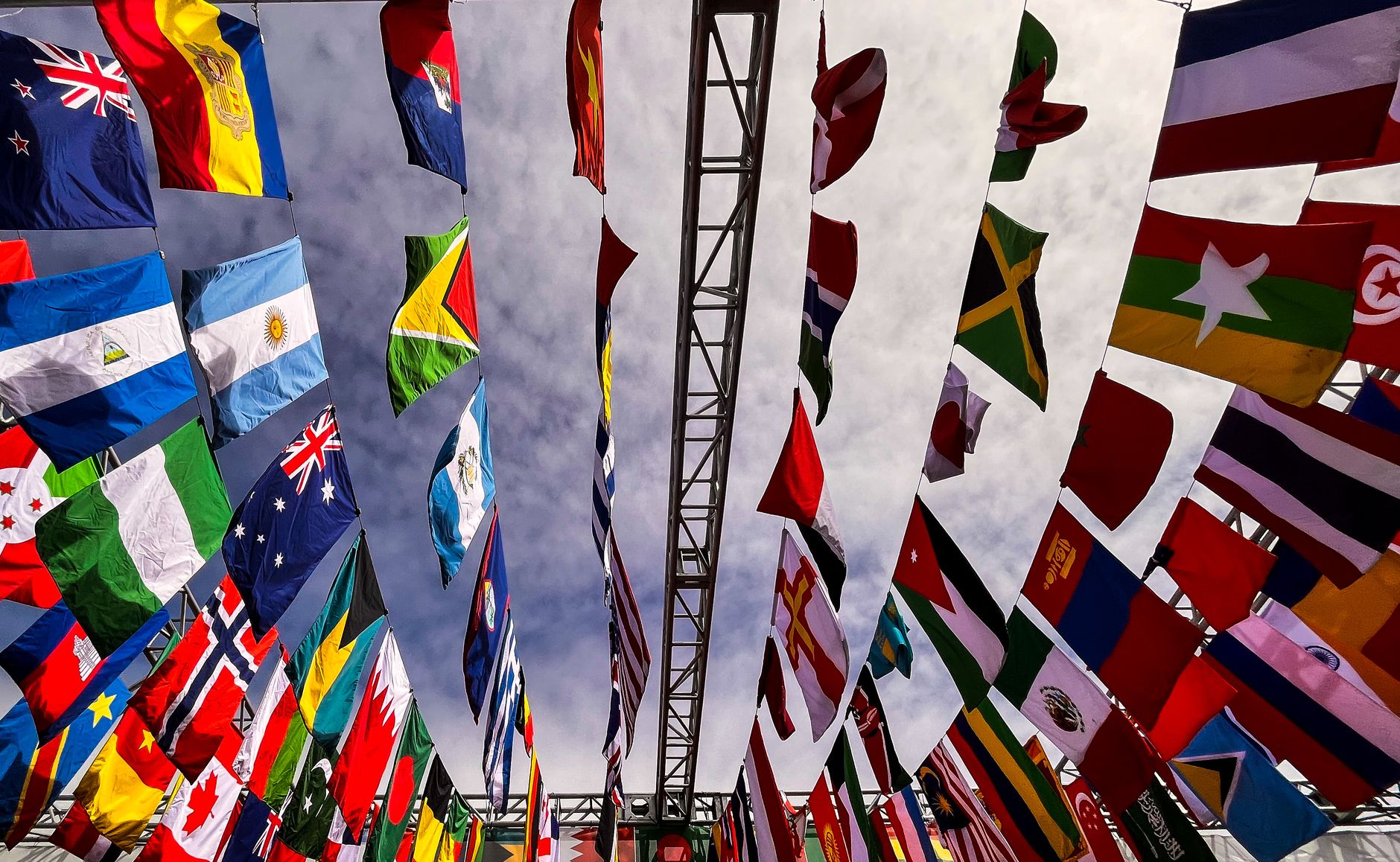
Photo by Karan Dalal on Pexels
The 2026 football world cup is already attracting attention because its scale changes almost everything: scheduling, squad rotation, ticket demand, accommodation, and pre-match modelling. I have watched enough tournaments turn confident predictions into expensive lessons to know that “obvious” football outcomes are usually just uncertainty wearing a cheap suit. According to FIFA’s official tournament information, the competition will involve 48 national teams, with the format designed to create 104 matches across North America. That means readers need more than a list of host cities; they need a practical way to verify information, compare match conditions, and separate useful evidence from social-media noise. For more background, consult the [Internal Link: complete 2026 World Cup format guide].
Want the essential tournament roadmap first?
Step 1: How should you map the 2026 football world cup?
The most reliable starting point is a verified tournament map: 16 host cities, three countries, 48 teams, and dates from June 11 to July 19, 2026. Mexico City, Toronto, Vancouver, Los Angeles, Atlanta, Miami, Dallas, and New York/New Jersey are among the major locations requiring separate travel and viewing plans. The distances are not a minor detail; North America is enormous, and your “quick trip” may involve a flight, a time-zone change, and a hotel bill that behaves like it has a personal grudge.
The host-city structure creates different match experiences. Los Angeles will stage eight matches at SoFi Stadium and promote fan activity around the Los Angeles Memorial Coliseum and regional official fan zones. Atlanta, branded by its host committee as a major soccer city in the South, will host matches at Mercedes-Benz Stadium, including a semifinal. Mexico City brings the historic Estadio Azteca into the tournament conversation, while Canada’s Toronto and Vancouver provide distinct climate and travel conditions.
For planning, create a simple table containing:
- Match date and kickoff time in local time.
- Stadium, host city, and nearest airport.
- Team travel distance from the previous fixture.
- Hotel, rail, shuttle, and public-transport options.
- Official ticket, fan-festival, and venue guidance.
Data shows that a tournament map is more useful than a generic “best cities” ranking because match timing determines crowd movement and accommodation pressure. FIFA’s official host-city overview should be checked whenever local schedules or venue instructions change.
Step 2: What should you know about the tournament format?
The 2026 format contains 12 groups of four teams, with the top two teams in each group plus the eight best third-placed teams advancing to a 32-team knockout stage. This structure produces 104 matches, up from the 64-match format used in previous 32-team World Cups, and it gives teams more opportunities to recover from one poor result. The trade-off is a longer tournament and a more complicated table, because third-place comparisons can matter until the final group fixtures.
That format changes how supporters and analysts should read the competition. A team with four points may qualify comfortably in one group but face pressure in another, depending on goal difference and the results elsewhere. A strong side may also rotate earlier if qualification is nearly secure, creating a nasty trap for anyone who treats squad names as a complete prediction model. As the International Football Association Board Laws of the Game demonstrate, tournament football remains governed by formal competition rules, but qualification calculations add a layer that casual previews often ignore.
Match Daily should therefore assess:
- Points, goal difference, and goals scored.
- Head-to-head rules where applicable.
- Final group-round kickoff alignment.
- Rotation risk after qualification.
- Knockout-path incentives and possible opponent strength.
A useful contrarian point is that the expanded format may reduce the value of early “must-win” language. More teams can survive a setback, so a cautious opening match may be strategically rational even when television pundits call it cowardice. Football analysis improves when you stop demanding drama from every fixture.
Ready to compare teams using actual context rather than reputation?
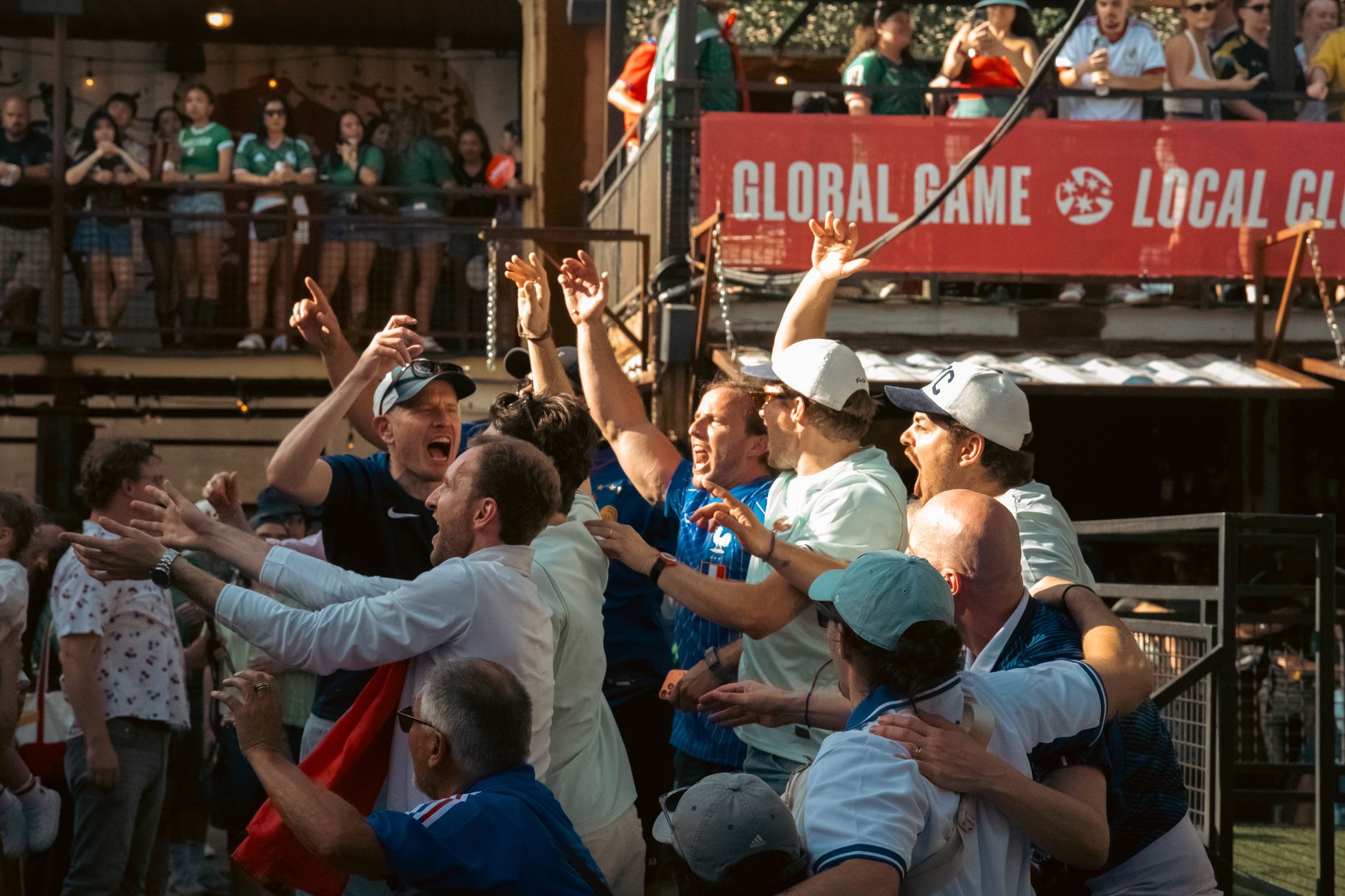
Photo by Alex Grajeda on Pexels
Step 3: How can you evaluate teams and players?
Team evaluation should combine recent performance, tactical identity, player availability, and opponent quality rather than relying on FIFA ranking alone. A national team’s last six results can look impressive if those matches involved weak opposition, friendly fixtures, or unusually favorable home conditions. Better analysis separates competitive matches from friendlies and tracks expected goals, shot quality, defensive transitions, set-piece output, possession zones, and goalkeeper performance.
Player data also requires caution. A forward with five goals may have benefited from penalties, while a midfielder with modest scoring numbers may control progression and create high-value chances. Match Daily’s player-stat approach should therefore record minutes played, starts, injuries, club workload, position changes, and international sample size. This matters particularly before June 2026, when club form and national-team selection may change quickly.
A practical pre-match checklist includes:
- Confirm the squad announcement and late injury reports.
- Compare the projected starting XI with the last competitive match.
- Review pressing intensity and defensive line height.
- Check set-piece roles, especially corner and free-kick takers.
- Adjust for climate, travel, altitude, and kickoff time.
- Treat head-to-head history as background, not destiny.
One operational insight is easy to miss: international tournaments compress recovery into a short window, so a team’s second match can reveal more than its opening performance. A high press that works in match one may collapse by match three if the squad lacks rotation quality. [Internal Link: player fitness and injury analysis] can help readers interpret that difference without worshipping a single headline statistic.
Step 4: Why do venue, travel, and fan zones matter?
Venue conditions matter because the 2026 football world cup stretches across three countries and multiple climate zones, making travel fatigue and local conditions relevant to performance. A match in Los Angeles is not operationally identical to one in Toronto, Atlanta, Monterrey, or Vancouver. Stadium roof design, outdoor temperature, humidity, pitch conditions, kickoff hour, and arrival distance can influence tempo, substitutions, and defensive concentration. No, this does not mean the weather automatically predicts the winner; that would be wonderfully convenient and completely unserious.
Los Angeles expects eight matches, major fan celebrations, and official fan-zone activity across the region, including programming connected with the Los Angeles Memorial Coliseum. Atlanta’s Mercedes-Benz Stadium offers a different urban experience, with the city’s soccer culture and semifinal status likely to attract international visitors. These fan events matter for supporters who cannot secure stadium tickets, but official schedules, entry rules, transport limits, and capacity restrictions should always be checked before travelling.
For a smoother matchday:
- Use the stadium’s official “know before you go” guidance.
- Allow additional time for security and public-transport queues.
- Keep accommodation within a realistic return route.
- Avoid assuming rideshare availability after full-time.
- Confirm whether fan festivals require free registration or timed entry.
- Keep digital and backup copies of tickets and identification.
An overlooked edge case is post-match transportation. A supporter who plans only the journey to the stadium can become stranded after a late finish, especially when thousands of people leave at once. The glamorous part is the anthem; the unglamorous part is discovering that your last train departed while you were arguing about a missed penalty.
Explore practical matchday planning before booking anything.

Photo by Vlad Vasnetsov on Pexels
Step 5: Verification before trusting a prediction
Verification means checking the source, timestamp, competition context, and uncertainty behind every claim. FIFA remains the primary reference for official schedules, regulations, venues, and tournament announcements, while host-city committees such as Los Angeles FIFA World Cup 26 and Atlanta FIFA World Cup 26 provide local event and transport information. Reputable statistical databases can support tactical analysis, but a model is only as reliable as its inputs; a missing injury or incorrect lineup can turn elegant mathematics into decorative nonsense.
Before publishing or using a prediction, verify:
- The fixture date, stadium, and local kickoff.
- Squad lists and confirmed absences.
- Whether the match is competitive or friendly.
- Recent performance against comparable opposition.
- Home, travel, weather, and rest conditions.
- The source date and whether later information supersedes it.
The United States Soccer Federation and national football associations can help confirm team announcements, while FIFA remains the authoritative tournament source. A 2026 tournament guide should never present an unconfirmed venue detail as settled fact. Official guidance commonly boils down to one sensible principle: check current information before acting. It is not glamorous, but neither is explaining to your friends why your “guaranteed” pick was based on a screenshot from three months ago.
When betting is involved, use only lawful, licensed services available in your jurisdiction, set a fixed budget, and never chase losses. Match Daily’s predictions are editorial analysis, not certainty or financial advice. For deeper reading, see the [Internal Link: responsible football betting guide].
Troubleshooting common failures
The most common 2026 football world cup planning failures come from outdated schedules, confusing local and home time, ignoring travel distance, and treating rankings as predictions. These problems are fixable when readers use a repeatable verification process instead of relying on a viral post or a confident stranger with a microphone. Research-backed analysis is not flawless, but it is far less fragile than instinct alone.
If a fixture appears inconsistent, check FIFA first, then the relevant host-city committee and national association. If a prediction changes sharply, look for lineup news, injury updates, weather, suspension information, or a market correction rather than assuming someone has “lost their nerve.” If a ticket or fan-zone page fails, use the official venue or tournament website directly, avoid unofficial resale links, and do not transfer money simply because a page uses familiar logos.
Use this troubleshooting sequence:
- Record the claim and its publication time.
- Locate the primary official source.
- Compare the information with a second reputable source.
- Identify what changed: venue, lineup, odds, weather, or rules.
- Recalculate the conclusion and document the uncertainty.
- If money is involved, stop when the preset limit is reached.
The contrarian conclusion is simple: the best World Cup edge is often not a secret player statistic. It is disciplined information hygiene. Most bad decisions are not caused by a lack of data; they are caused by using stale data with absolute confidence.
Frequently Asked Questions
Q: What is the 2026 football world cup?
A: The 2026 football world cup is FIFA’s men’s international tournament hosted by the United States, Canada, and Mexico from June 11 to July 19, 2026. It will feature 48 teams, 104 matches, and 16 host cities across North America. The final is scheduled for MetLife Stadium in New Jersey, while the opening match is scheduled for Mexico City. Because the format is larger than previous 32-team editions, supporters should verify group qualification rules, match times, and venue details through FIFA before planning travel or analysis.
Q: How does the 48-team World Cup format work?
A: The 48 teams will be divided into 12 groups of four, with the top two teams and eight best third-placed teams advancing. This creates a 32-team knockout stage and 104 total matches, significantly increasing the tournament’s length compared with the traditional 64-match format. Group tables may remain unsettled until the final round, so points, goal difference, goals scored, and applicable tie-breaking rules must be checked together. Early qualification can also increase squad rotation and make late group matches harder to predict.
Q: What is the difference between the 2026 World Cup and Qatar 2022?
A: The 2026 World Cup has 48 teams and 104 matches, while Qatar 2022 had 32 teams and 64 matches. The 2026 tournament is also spread across the United States, Canada, and Mexico, creating far greater travel distances and different climate conditions. Qatar used a compact geographic footprint and a November-December schedule, whereas 2026 will take place during the North American summer. Those differences affect recovery, preparation, accommodation, and tactical evaluation.
Q: How can I start following the 2026 football world cup?
A: Start by creating a verified fixture list, then track host cities, kickoff times, squad announcements, injuries, and official ticket or fan-zone updates. Use FIFA for tournament information and host-city websites for local transport and event instructions. Match Daily can supplement that process with predictions, player statistics, tactical previews, and daily tournament coverage. Do not rely on social-media graphics alone, because a changed kickoff or venue can make an otherwise careful plan useless.
Q: How much does it cost to attend the 2026 World Cup?
A: The total cost depends on tickets, city, accommodation, flights, transport, food, and match quantity, so there is no single reliable tournament price. Los Angeles, New York/New Jersey, Miami, and other major destinations may create different hotel and transport costs from Vancouver or Mexico City. Official FIFA ticket information should be used for ticket pricing and sales phases, while host-city sources can clarify local travel. Set a complete trip budget before purchasing anything and treat unofficial resale offers as a fraud risk.
Q: Why might a World Cup prediction fail?
A: A prediction can fail because of late injuries, unexpected lineups, tactical changes, travel fatigue, weather, red cards, penalties, or simple football variance. Rankings and recent results do not capture every match condition, especially when a team faces opposition of very different quality. Check the confirmed lineup, rest period, venue, and competitive context close to kickoff. Even a well-calibrated model describes probability rather than guaranteeing an outcome, which is an irritating truth but still the truth.
Q: What should I do if World Cup betting becomes difficult to control?
A: Stop betting, do not chase losses, and use deposit, spending, or self-exclusion tools available through the licensed operator in your jurisdiction. Keep a fixed entertainment budget and never borrow money to continue. Match Daily provides football analysis, not guaranteed returns, and predictions should never be treated as financial advice. If gambling is affecting bills, relationships, work, or mental health, contact a qualified local support service or gambling helpline promptly.
The 2026 football world cup will reward preparation more reliably than bravado. Track official information, compare teams using meaningful evidence, account for travel and recovery, and keep predictions within a responsible entertainment budget. Match Daily will continue covering fixtures, tactics, player statistics, and tournament developments as the competition approaches, while the final decision about whether to watch, travel, or bet remains yours.
Want continued 2026 World Cup coverage from Match Daily?
Thank you for reading.
Match Daily · Strategic Archive